



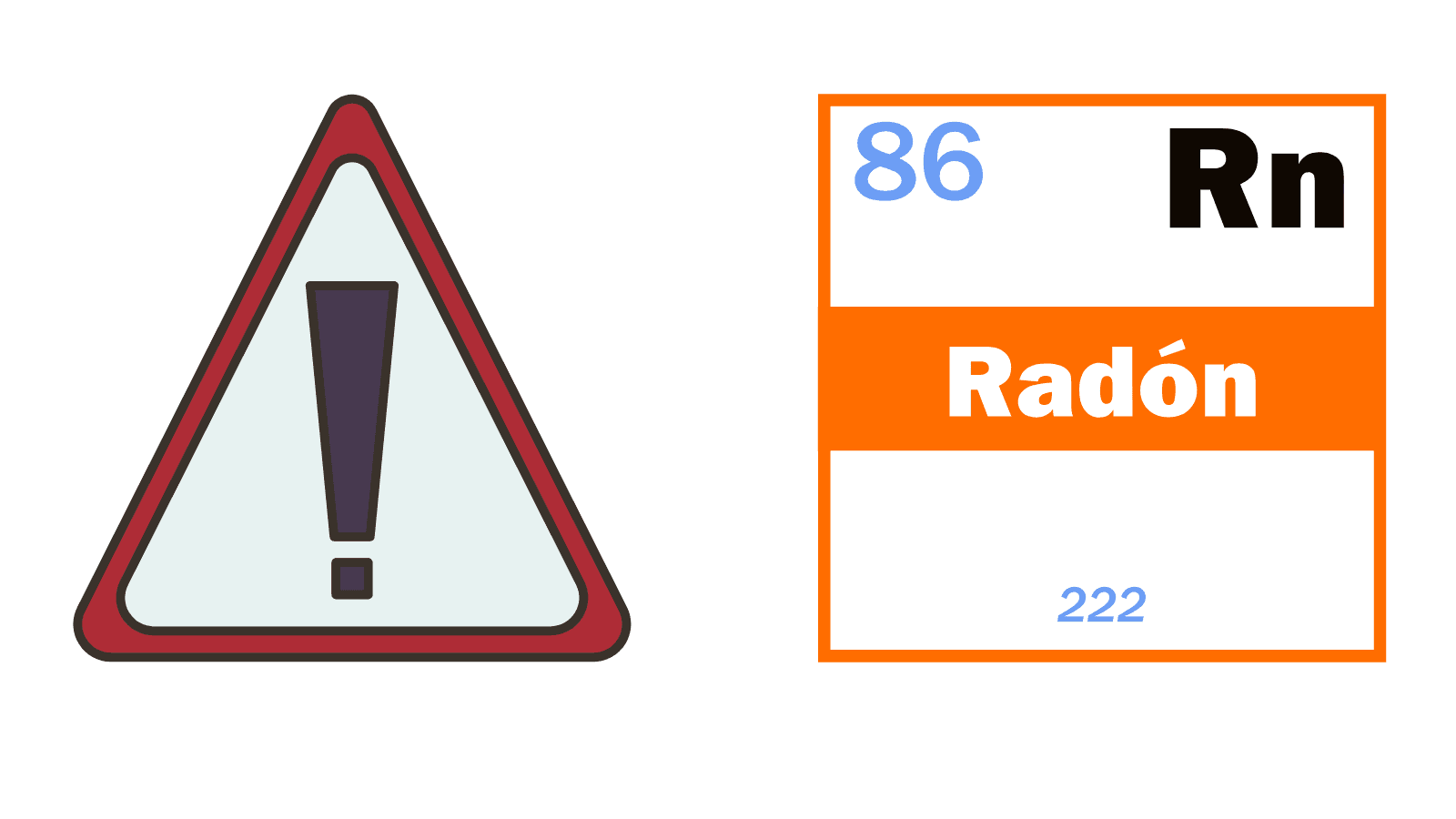
Source: Canva
January is Radon Action Month: Test your home for this radioactive gas
Radon is the 2nd leading cause of Lung Cancer in America.

Jan 27, 2026, 6:00 AM CST


Share
Listen:
OSHKOSH, WI—(WISS)— January is Radon Action Month. The Wisconsin Department of Health Services and the Winnebago County Public Health Department are encouraging residents to test their homes for the odorless, colorless, radioactive gas, the second-leading cause of lung cancer among nonsmokers in the United States.
According to the U.S. Environmental Protection Agency and the Surgeon General, radon causes an estimated 21,000 lung cancer deaths per year. About 962 of those deaths are in Wisconsin.
In a press release, the DHS explained that January is typically the best time to test for the gas. It is the time levels are the highest.
Morgan Peterson is an Environmental Health Specialist with Winnebago County Public Health.
“It’s an odorless, invisible gas that you cannot see or smell in your home. So that’s why we recommend testing during January, especially. Because your home is closed up at that time, and that’s when you’ll have the highest levels of radon,” Peterson said.
According to DHS data, about 1 in 10 homes in Wisconsin has high radon levels. The gas typically enters the home through the foundation, becoming trapped inside with the windows shut tight.
Any home or building can be susceptible to radon. The only way to know whether your house or apartment has elevated levels is to test.
“Even in newer homes, just with how they are built. There are stipulations on how to build a, like a radon safe home. There are qualifications that would make that, but a lot of contractors do not build homes that way,” Peterson said. “That’s why we always tell those with newer homes that they should be testing as well.”
Test for Radon
Peterson added that radon is not a chemical associated with manufacturing or any toxic hazards. It is a naturally occurring problem and can affect any home.
“Just that radioactive decay that happens. So, that’s what is kind of coming up from your foundation, from the natural bedrock or whatever you have underneath your home. That’s how that kind of comes into the foundation and through windows. It just kind of seeps in naturally,” she said.
Peterson said the lower levels of the home, such as the basement, usually show the most concentration of the gas.
”The lowest livable part of your home. So if you spend a lot of time in your basement, we recommend testing down there because that’s where the levels will be the highest,” said Peterson. “Level by level, it goes down a little bit less. So on the first floor, could be a little bit less than it would be in the basements.”
Radon test kits are widely available. Purchase them online for under 30 dollars. Reduced-cost test kits are available through Radon Information Centers (RIC) in Wisconsin, and test kit promotions are happening throughout January.
You can also get a free test kit from the Outagamie County Public Health Vending Machine while supplies last.
Residents of Winnebago County can purchase Radon testing kits for $5 throughout January. Buy kits from Winnebago County Public Health offices in Oshkosh at 112 Otter Avenue and in Neenah at 211 North Commercial St.
Visit lowradon.org to find a RIC or speak with local public health department radon experts by calling 1-888 LOW-RADON to discuss available options.
If a test shows unsafe levels of radon, more than 100 radon mitigation contractors in Wisconsin who are nationally certified to install radon mitigation systems.

Lisa Hale is Northeast Wisconsin Bureau Chief and the voice of newscasts on WISS. Email her at [email protected].
Want More Local News?
Civic Media
Civic Media Inc.
The Civic Media App
Put us in your pocket.